
Davidson County Public Records and the TPRA
Tennessee starts from a presumption of access. State, county, and city records are open to Tennessee citizens during business hours, unless a statute, court rule, or federal law makes a record confidential. The Tennessee Public Records Act, at T.C.A. § 10-7-503, is the core of that right. Each county office adopts a written public records policy under the same law.
The Office of Open Records Counsel publishes guidance on how the act works.
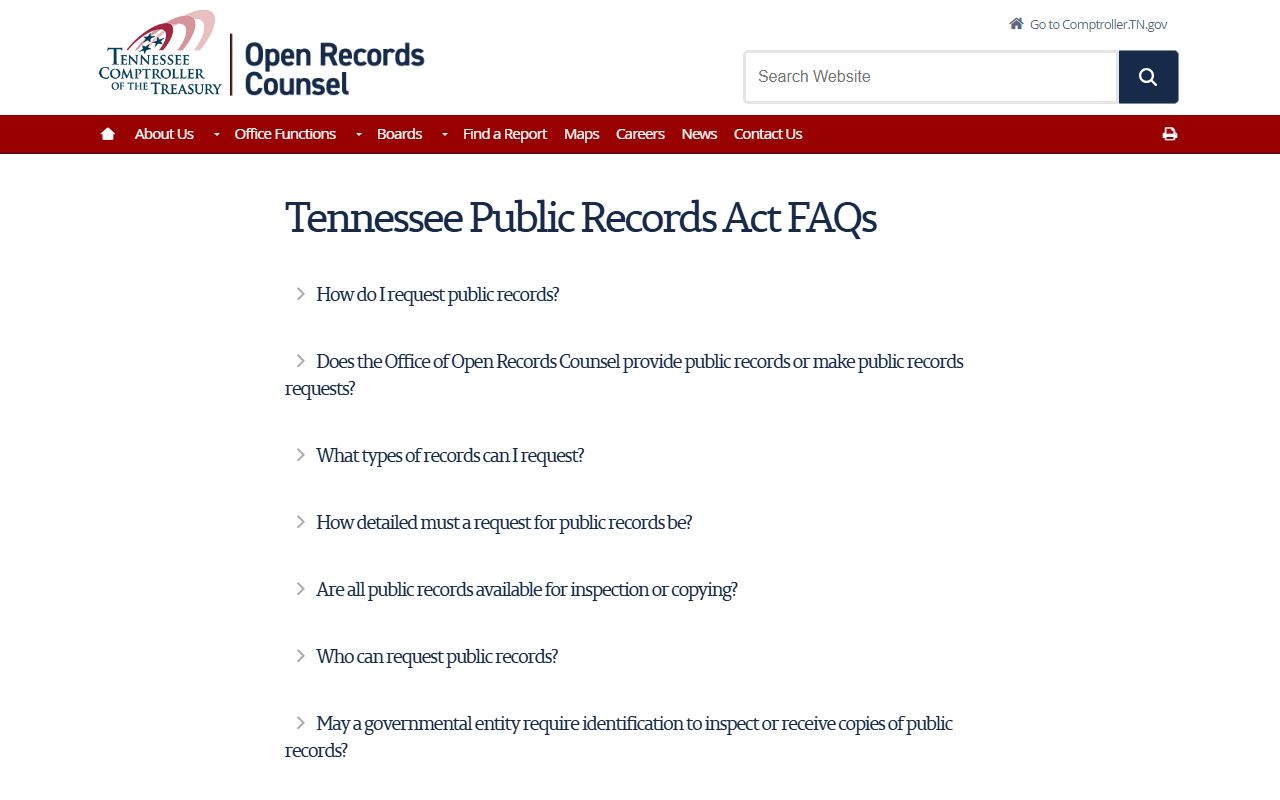
An office may ask for proof of Tennessee citizenship and may charge for copies, but inspection of open records carries no fee. The request should be detailed enough for the office to identify the record you want, which speeds the whole process.
Court Records and Supreme Court Rule 34
Court records add a layer on top of the open-records act. Tennessee Supreme Court Rule 34 sets public access to court records unless a record is excepted, sealed, or protected. It covers case records, administrative records, and judicial records, and it treats them differently. Sealed cases, drafts, and a judge's internal notes are not public.
For an ordinary court filing, the fastest path is usually the clerk and a case number, not a formal records request.
What County Records Are Available
Public records reach well beyond the courtroom. Different Davidson County offices hold different records. The County Clerk handles marriage, business, and notary records. The Sheriff holds jail and offender records. The Register of Deeds holds property records. State Vital Records holds certificates. The list below shows where common records live.
- County Clerk: marriage licenses, business licenses, notary and vehicle records.
- Circuit and Criminal Court Clerks: court case files.
- Sheriff's Office: jail and offender records.
- Register of Deeds: deeds and property records.
- State Vital Records: birth, death, marriage, and divorce certificates.
How to File a Davidson County Public Records Request
A request works best when it is specific. The office needs enough detail to identify the record. Inspection-only requests can sometimes be oral, but requests for copies must be in writing. The steps below follow the county policies reviewed for this research.
- Identify the office that holds the record.
- Describe the record in enough detail to locate it.
- Put any copy request in writing.
- Provide proof of Tennessee citizenship if asked.
- Choose a delivery method, such as pickup, email, or mail.
- Pay any copy or postage charges that apply.
The County Clerk public records policy explains its request methods.
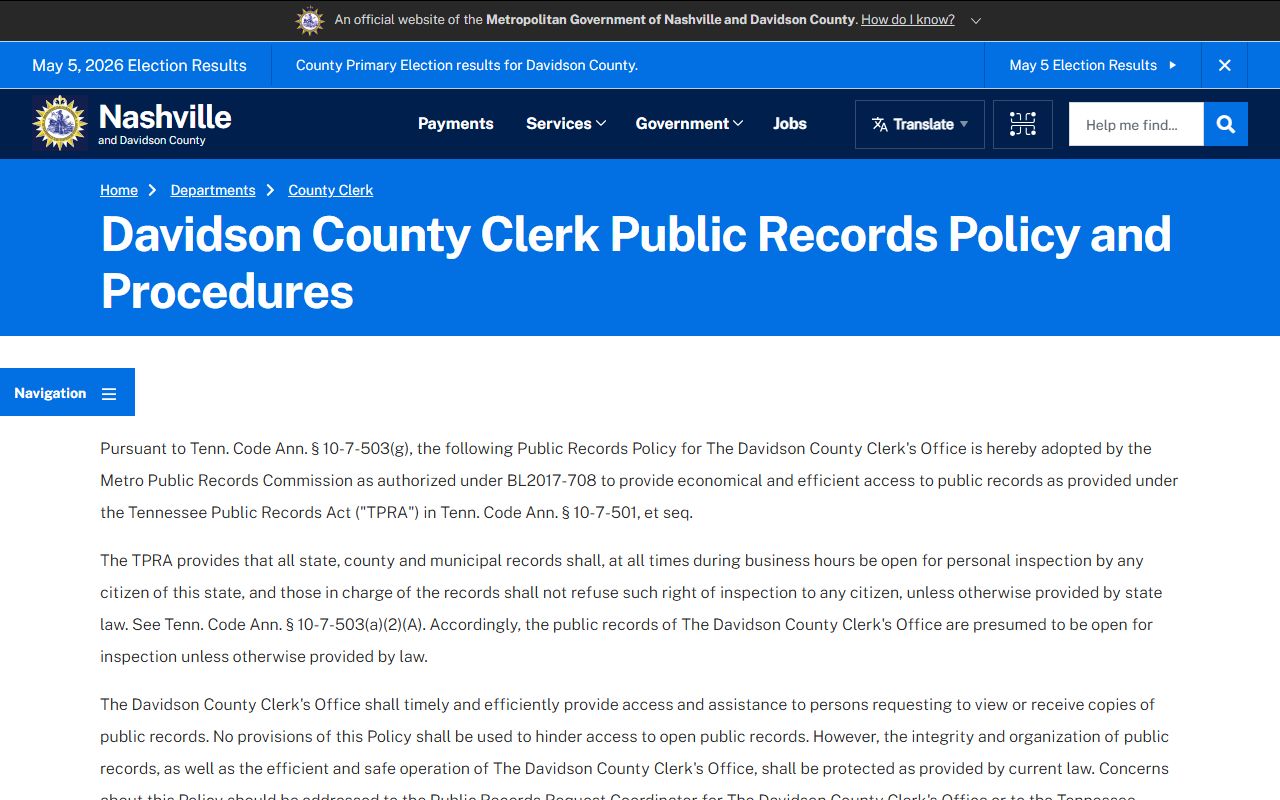
You can also photograph records during an inspection, but those photos are not certified copies.
Public Records Request Response Fields
When an office responds, it often uses a standard response form. The Circuit Court Clerk uses one that captures the requester's contact details and how the office handled the request. The fields below come from that response form.
| Field Label | Type | Notes |
|---|---|---|
| Requestor Name | Text | Name of the requester. |
| Phone and Email | Text | Contact for the response. |
| Mailing Address | Text | Where a written response is sent. |
| Records request received on | Date | The clerk enters the original request date. |
| Delivery method | Checkbox | Inspection, copies, mail, or electronic. |
| Denial grounds | Checkbox | Reasons a request may be denied. |
Fees and Copy Costs
There is no fee just to inspect open records. Copies do carry charges, and the rate depends on the office and the format. The County Clerk uses a default copy rate for black and white and a higher rate for color. The clerk offices charge per page for court copies, plus a flat fee to certify. The amounts below were listed on the official pages at research time.
| Item | Amount |
|---|---|
| County Clerk black and white copy | $0.15/page |
| County Clerk color copy | $0.50/page |
| Court clerk plain copy | $0.50/page |
| Court clerk certification | $5 + $0.50/page |
Response Times
An office should make open records promptly available. When it needs more time to locate, review, or redact records, the policy framework gives it up to seven business days to respond, provide the records, deny the request, or send a completed response form. A denial must state the grounds, and a requester can challenge a denial in court under the act's enforcement provisions.
Note: If you do not give a preferred mailing or email address, a written response may be sent to the address shown on your proof of Tennessee citizenship.
Inspecting, Copying, and Photographing Records
Inspection and copies are handled differently. You can inspect open records at no charge, and the County Clerk policy lets a requester photograph records with a smartphone or camera during that inspection. Those photos are not certified copies. For cybersecurity reasons, a requester may not plug a personal flash drive into a county computer, though an office may provide electronic copies on its own media when available.
If you need a certified copy for a legal use, that comes through the office copy process, not a phone photo. Ask for certification when you submit the request.
When Another Office Holds the Record
Sometimes the request lands at the wrong desk. If another government entity has custody of the record, and the records officer knows which one, the policy expects that office to point the requester to the correct entity and contact. Naming the record type and a date range up front helps the office route the request quickly. For court files, the relevant clerk is almost always the right starting point rather than a general county office.
Court Records vs Public Records Requests
These are two different routes. Searching a case portal, requesting a clerk copy, and filing a formal public records request are not the same thing. For documents filed in an ordinary court case, the clerk's copy process is usually faster than a general request. Chancery, for example, does not require a public records request form for copies of filings in regular court cases. A case number speeds any of these paths.
For the case search process itself, see the court records page.
Confidential Exceptions
Open access has limits. State law lists many confidentiality exceptions, including sensitive personal information and certain investigative records. Sealed and protected court records are closed. Juvenile records are restricted. Adoption records require a court order. Sensitive identifiers like Social Security numbers and financial accounts are redacted from public copies. A blank or denied result does not always mean a record does not exist; it can mean the record is closed by law or held under a seal.